
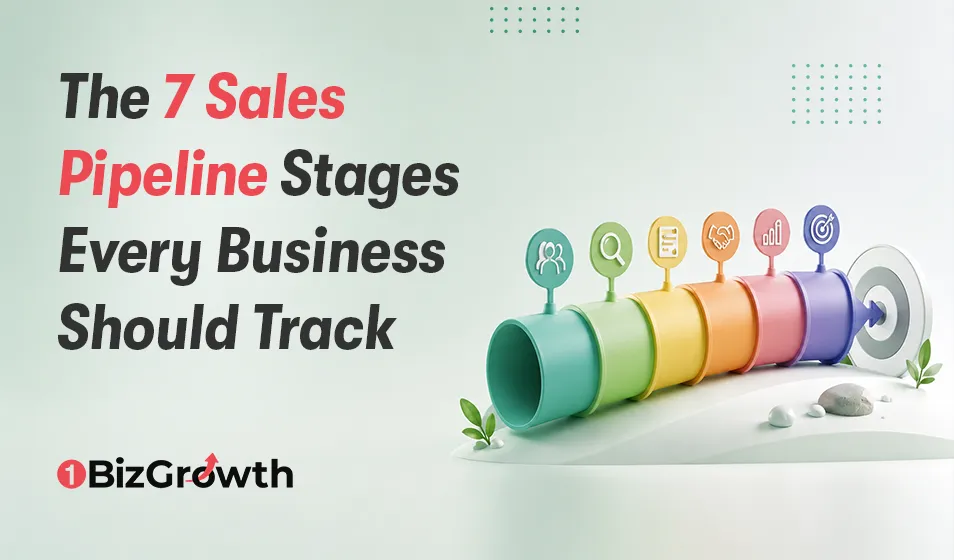
The 7 Sales Pipeline Stages Every Business Should Track
Most deals don't die from a bad pitch. They die from a stage nobody was tracking.
If you run a small team, you've felt this. A lead goes quiet for three weeks, and nobody notices until the deal's gone cold. That's a tracking problem, not a sales one.
A clear pipeline fixes that. Good pipeline software gives you stages you can actually see instead of guess at. If you're running everything else off spreadsheets too, the right CRM platform keeps your pipeline, contacts, and follow-ups in one place instead of five browser tabs.
Here are the 7 stages worth tracking, and why each one earns its spot.
1. Prospecting
This is where leads enter. Cold list, referral, inbound form, it doesn't matter which. What matters is logging it the moment it shows up. I've seen teams lose deals simply because a lead sat in someone's inbox for a week before anyone added it anywhere.
Set a rule: log every lead within an hour, not by end of day. An hour feels small, but a day's delay on 30 leads a week adds up to real money by quarter's end.

2. Qualification
Not every lead deserves your time. Budget, timeline, fit: check these before you invest hours. A 20-minute call here can save you from chasing someone who was never going to buy.
Write your qualification questions ahead of time. Three or four, no more. Wing it, and qualification turns into a vibe check, and weak leads slip through to your busiest closer.
3. Needs analysis
This is where you actually listen. What's broken for them right now? What have they already tried? Skip this step, and your pitch turns into a guess.
Good reps take notes here that get used three stages later. A throwaway comment about a tight Q3 budget tells you exactly how to frame the proposal you send next.
4. Proposal or quote
You've got a number on paper now. Specific pricing, specific scope. Vague proposals get vague answers. Specific ones get a yes or a no.
Send it fast too. A proposal that takes two weeks to land feels like the deal already cooled off, even when nothing else changed.
5. Negotiation
Price pushback, scope changes, internal approvals: this stage can stretch for weeks. Track how long deals sit here. Something stuck for a month is worth a closer look, not a shrug.
Set a soft limit, say 21 days, and flag anything past it. Deals rarely die loudly. They just sit in negotiation until everyone forgets about them.
6. Closed won
The deal's signed. Log it, but don't treat the signature as the finish line. What happens in the first 30 days after matters just as much for keeping that customer.
This stage also feeds your forecasting. Closed-won data from last quarter, broken down by source and rep, tells you where to put next quarter's budget.
7. Closed lost
Track this one too. Losses often teach more than wins. Price, timing, a competitor, bad fit: the pattern across your lost deals changes how you qualify the next ten leads.
Tag the reason every time, even when it stings. A loss tagged "price" five times in a row is your pricing telling you something. A loss tagged "went quiet" five times is your follow-up process telling you something else.
Why tracking all 7 beats chasing closes
The bottleneck is rarely where you think it is. A team can be great at closing and still slow, because the real problem sits upstream, burning weeks on leads that were never going to convert.
Each gap between stages is data. A pile-up at negotiation says something about your pricing. A pile-up at qualification says something about your lead source. You only see either one if you're tracking by stage, not just by outcome.
Skip stages, and you lose the story in between. Teams that track only open and closed can tell you a deal stalled, but not why. And nobody owns "get proposals out within 48 hours" if there's no proposal stage to measure it against.
Keep it simple
You don't need 15 stages and a color-coded chart nobody updates. Seven solid stages, tracked consistently, beat 20 stages tracked by no one.
Pick a version your team will actually use every day, then stick with it for a quarter before you tweak anything. A pipeline only works if people update it. For most small teams, that's the real bottleneck, not the stage count.
Track it instead of guessing at it
Track all 7 stages, and you'll always know exactly where a deal stands and why it's stuck there. Run it inside an all-in-one business platform, and pipeline tracking sits next to your CRM, marketing, and follow-up tools instead of living in a separate spreadsheet.





