
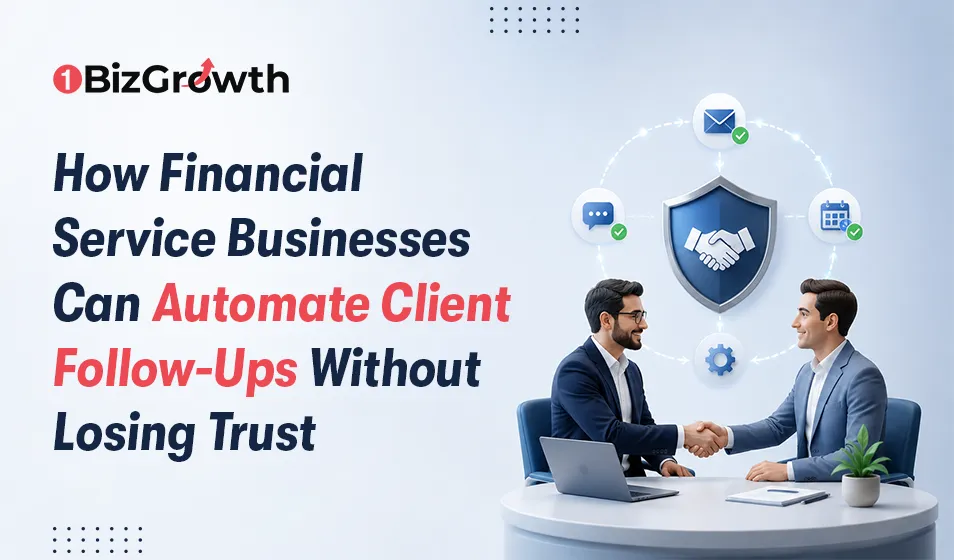
How Financial Service Businesses Can Automate Client Follow-Ups Without Losing Trust
One in five financial clients has switched providers over bad communication. Not bad returns. Not high fees. Just poor follow-up.
A recent customer communication report put that number at 20 percent, and anyone running a financial services business already knows the feeling behind it: a client waiting on a callback that never comes, a document request that goes unanswered for a week, a renewal date that sneaks up on nobody until it's already late. The instinct is to automate that away. The hesitation is that automation, done wrong, is exactly what makes a client feel like a ticket number instead of a relationship. A multi-channel marketing automation system built for this industry can do both at once, if it's set up with that tension in mind from day one.
Why 'automated' sounds risky here
Financial services runs on trust more than almost any other industry. Someone hands over account numbers, income details, sometimes their entire retirement plan. A generic mass email lands differently in that context than it does from a clothing brand. It reads as careless with something that isn't casual.
That's the real fear behind automation in this space, and it's a fair one. Being precise about which parts of the relationship can run on a system, and which ones can't, solves it.
What erodes trust
Automation that ignores context is usually the actual culprit, not automation itself. A follow-up that goes out three days after a client already called in about the same thing. A renewal reminder addressed to the wrong account type. A message that reads like it was written for ten thousand people at once, because it was.
Clients notice when a firm gets those details wrong more than they notice when a reminder arrives on time. Precision reads as care. Sloppiness reads as being just another account on a list.

What's safe to automate
Appointment reminders sit at the easy end. So do document requests, statement availability notices, and renewal windows coming up on the calendar. These are facts, not judgment calls, and a client generally wants them delivered fast and reliably more than they want them delivered by a specific person.
Review requests and satisfaction check-ins after a resolved case work well automated too, timed a day or two after the interaction instead of firing the moment a ticket closes. Onboarding sequences for new clients, when personalized with the actual details from their intake, save a team hours without ever feeling like a form letter.
What still needs a person
Anything tied to a loss, a complaint, or a major life event stays with a human. A client going through a claim dispute, a market downturn conversation, an estate question after a death in the family: none of that should ever open with an automated message, no matter how well-timed.
The line isn't complicated once you draw it. Facts and logistics can run on a system. Anything emotionally loaded, or anything where the client needs to feel heard rather than informed, needs a person on the other end.
Personalization is what makes the difference
The same follow-up sent to two clients shouldn't read identically if their situations are different. Tailoring tone and content to the actual account, not just inserting a first name into a template, is what separates automation clients tolerate from automation clients actually appreciate.
This also means logging every automated touchpoint the same way a human interaction gets logged. Regulatory expectations in financial services increasingly require a documented trail of what was communicated and when, so the system needs to be built for that from the start, not bolted on after a compliance review flags a gap.
The EU's Digital Operational Resilience Act, in effect since January 2025, is one concrete example: firms now need structured, documented communication protocols, not just for outages, but as a baseline expectation of how client communication gets handled. A follow-up system built without an audit trail is already behind that standard, even outside the EU, since the direction regulators are moving is the same everywhere.
Getting the balance right
Map every recurring client touchpoint your team handles in a typical month. Sort each one into two piles: pure logistics, or anything with emotional weight attached. Automate the first pile. Leave the second one with your team, and give them the automation's time savings back to spend on exactly those conversations.
Done that way, automation protects the hours your team needs for the calls that actually require a person, instead of quietly replacing the relationship it's supposed to support. If you want help mapping that split for your own client base, get in touch with OneBizGrowth and we'll walk through what's safe to automate first.





