
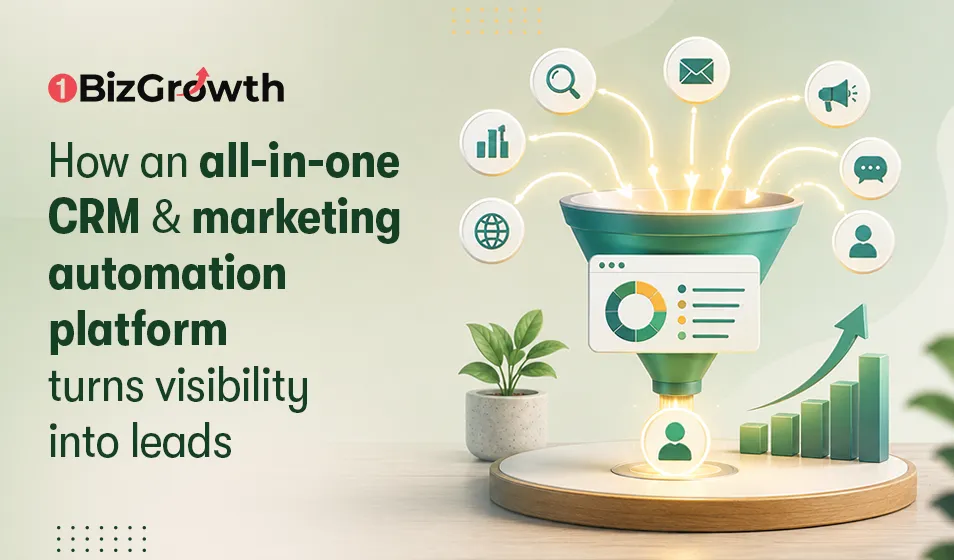
How an all-in-one CRM & marketing automation platform turns visibility into leads
TL;DR
Getting visibility through ads, SEO, and reviews is only half the battle. Many businesses lose leads because inquiries from forms, calls, chats, and reviews aren't tracked or followed up consistently. An all-in-one CRM and marketing automation platform centralizes lead data, automates lead scoring, routing, and follow-ups, and keeps sales pipelines moving without manual effort. This helps businesses respond faster, reduce missed opportunities, manage multiple locations more effectively, and turn existing traffic into more conversions without increasing marketing spend.
A local HVAC company we know spent three months running Facebook ads. Traffic went up. Phone rang more. Then someone pulled the numbers at the end of the quarter and found maybe a third of those calls ever got logged anywhere. The rest just happened. No name, no follow-up, no idea who converted.
That's the gap nobody budgets for. Visibility isn't the hard part anymore. Ads and SEO and reviews can get you seen. The hard part is catching what shows up and doing something with it before it walks away. That's what an automated lead generation system is for. Not generating more traffic but making sure the traffic you already have doesn't leak out the bottom.
Where leads go missing
A form fills out at 9pm and sits in an inbox until Monday. A phone call rings through and nobody's at the desk. A Google review mentions interest in a bigger package, and nobody follows up on it.
None of this is anyone's fault, exactly. Most small businesses run lean. There isn't a dedicated person whose whole job is catching every signal across five different channels. That's the actual argument for automation. Not replacing the sales team. Catching what a lean team physically can't watch every hour of every day.

What visibility gets you, and what it doesn't
Rankings, ad clicks, review stars, social mentions. All of it puts your name in front of someone who has a problem you solve. None of it tells you who that person is. What they need or when they're ready to talk.
A CRM connected to your marketing closes that gap. Every form, every call, every chat widget click lands in one place instead of scattered across a Gmail inbox, a spreadsheet, and whatever the receptionist scribbled on a sticky note.
Routing and scoring, without a human doing it manually
A lead that fills out a quote request for a kitchen remodel shouldn't sit in the same queue as someone downloading a free checklist. Automated scoring sorts them the moment they come in, based on what they did, what page they were on, whether they've been on the site before.
Routing does the rest. High-intent lead goes straight to a rep's phone as a text alert. Lower-intent lead drops into a nurture sequence instead, an email today, a text in three days, a call reminder for the rep a week out if nothing's happened.
Nobody's manually deciding this at 11pm on a Tuesday. The system already did it before the lead finished closing the browser tab.
The follow-up problem, solved with less effort than it sounds
Speed to first contact matters more than almost anything else in this business. A lead contacted within five minutes converts at a dramatically higher rate than one contacted an hour later. Most businesses aren't losing deals to competitors with a better product. They're losing them to whoever called back first.
Automated sequences don't get tired, don't forget, don't wait until Monday. A text goes out the second a form submits. A follow-up email fires if there's no response in 48 hours. None of it needs a person remembering to hit send.
Reviews and referrals feed the same system
A happy customer leaves a five-star review. Nice, but on its own it just sits there. Connect that review request into the same platform and it becomes a trigger: tag the customer, ask for a referral two weeks later, add them to a loyalty sequence if they haven't bought again in six months.
None of that needs someone remembering to check who left a review last Tuesday. It fires automatically, off the same data that's already tracking their quote request and their first phone call.
What this looks like across multiple locations
A single shop can survive on a shared inbox and a good memory. Five locations can't. Once you're running multiple sites or franchise locations, a lead generated in one city needs to route to the right team, not sit in a queue meant for headquarters.
A connected platform handles that split automatically, based on zip code, service area, or whichever rule actually matches how the business operates. Reporting rolls up to one dashboard too, so an owner isn't logging into five separate systems just to find out which location is falling behind on follow-up.
Catching the lead is only half of it. The other half is making sure it doesn't stall out in someone's inbox for three weeks while they're busy with other work.
This is where sales pipeline automation earns its place. Deals move through defined stages automatically, reminders fire when a deal's gone quiet, and a manager can see at a glance which reps are sitting on leads instead of working them.
That HVAC company we mentioned earlier? Once they connected their ad forms, phone lines, and review requests into one pipeline, they weren't running more ads. Same budget, same traffic. They just stopped losing a third of it to nobody picking up the phone.
That's the actual return on this kind of platform. Not more visibility. Less waste on the visibility you're already paying for.





